Ube Drinks for Cafés: Inspiration for Trendy Coffee Shops and Matcha Bars

Ube is appearing more and more frequently in modern cafés, matcha bars, bubble tea shops, and dessert cafés. While matcha has become a standard menu item over the past few years, purple drinks are now becoming increasingly popular. Think of ube latte, ube matcha latte, ube cold foam, coconut ube drinks, and layered iced beverages with coffee or matcha.
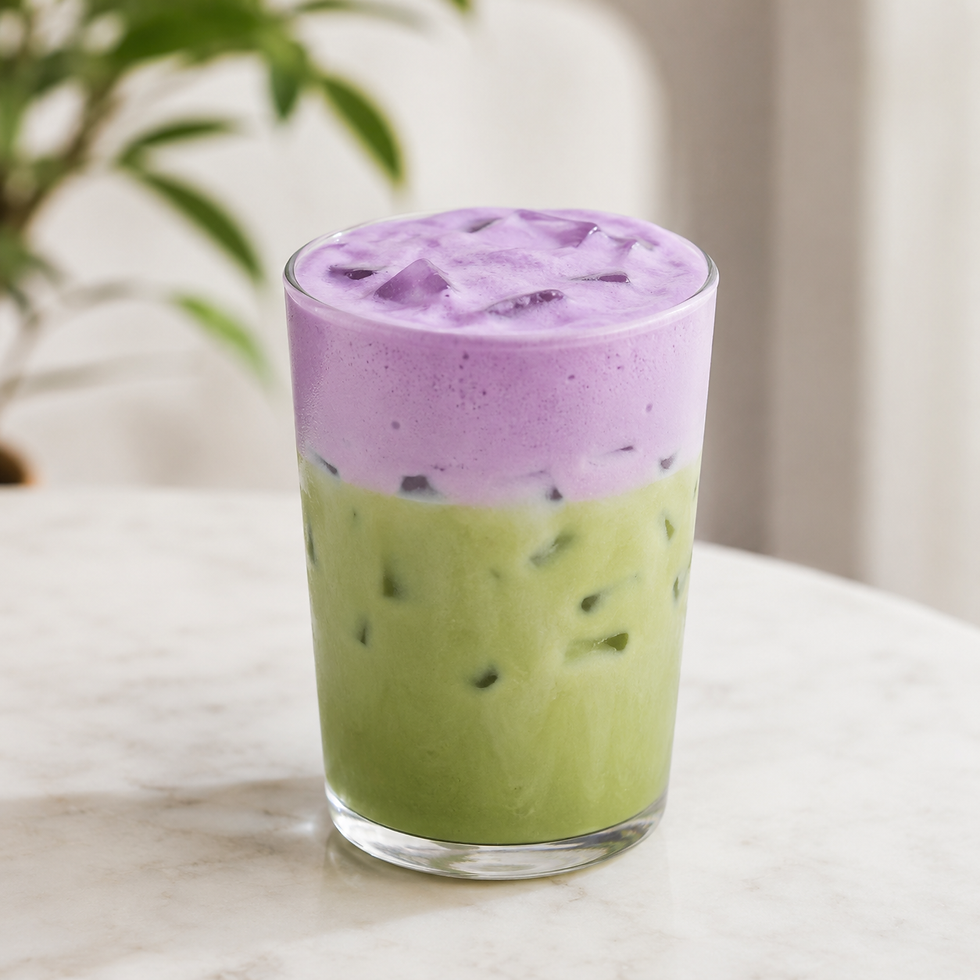
For trendy coffee shops, this is an interesting development. Ube immediately stands out because of its vibrant purple color, while its flavor remains soft and approachable. It is creamy, mildly sweet, nutty, and slightly vanilla-like. This makes ube an excellent pairing with milk, oat milk, coconut milk, matcha, espresso, cold brew, and various types of foam.
In Amsterdam, several variations are already appearing, including ube latte, ube matcha cold foam, ube cloud foam matcha latte, ube coffee rain, ube rain matcha latte, and coconut ube cloud. While the names differ from café to café, the concept is usually the same: a visually striking layered drink featuring ube, milk, matcha, coffee, or a creamy foam topping.
In this blog, we share inspiration for ube drinks that cafés, matcha bars, and bubble tea shops can add to their menus.
Why Ube Is Interesting for Coffee Shops and Matcha Bars
Ube works particularly well in cafés because it combines three important qualities: color, flavor, and versatility.
The purple color immediately attracts attention. This is important in modern food service because many customers see a drink before they taste it. A green matcha latte or brown iced latte has become familiar. A purple ube latte or a green-and-purple layered drink instantly feels newer and more exciting.
The flavor is also highly accessible. While matcha can sometimes be bitter or earthy, ube is soft, creamy, and mildly sweet. This makes it easy to incorporate into existing menu items. Customers do not need a completely unfamiliar drink explained to them. You can start with familiar formats such as lattes, iced lattes, milk teas, or cold foams and simply add ube.
Internationally, ube is increasingly featured in beverages such as ube lattes, ube milkshakes, and ube cold foam drinks. Matcha combinations are also becoming popular because matcha’s earthy profile contrasts beautifully with ube’s creamy and smooth character.
1. Ube Latte
The ube latte is probably the easiest way to introduce ube to your menu. It is familiar, simple, and visually appealing.
A basic ube latte consists of:
Ube base
Milk or oat milk
Ice or steamed milk
Optional sweetener
Optional espresso
The classic version contains no coffee. It is a creamy purple milk drink centered around the flavor of ube. Coffee shops can also create an ube coffee latte by adding a shot of espresso. The mild bitterness of coffee pairs beautifully with ube’s sweet, creamy flavor.
For cafés, this is an ideal starting point because the recipe is easy to train staff on and quick to prepare during service.
Read our full guide on how to make an ube latte.
2. Iced Ube Latte
An iced ube latte may be even more attractive than the hot version. The purple color looks stunning in a glass filled with ice and milk, especially when served with visible layers.
A simple build:
Ube base at the bottom
Ice cubes
Cold milk or oat milk
Optional swirl or gentle stir
For a premium presentation, do not fully mix the drink. Allow the purple ube and milk to blend naturally for a marble effect without additional ingredients.
Iced ube lattes work especially well as a summer beverage, limited-time special, or social media-friendly menu item. They are simple, photogenic, and easy for customers to understand.
3. Ube Matcha Latte
An ube matcha latte combines green matcha with purple ube. It is one of the strongest visual combinations you can create with ube.
The flavor pairing works exceptionally well too. Matcha is earthy, vegetal, and slightly bitter, while ube is creamy, smooth, and mildly sweet. Together they create a drink with greater depth than a standard iced latte.
Possible build:
Ube base at the bottom
Ice
Milk or oat milk
Matcha shot on top
Serve it as a layered drink so the purple ube, white milk, and green matcha remain visible. This makes it perfect for matcha shops with an existing matcha-loving audience.
Use a matcha that is not overly bitter to maintain a balanced and smooth flavor profile.
4. Ube Matcha Cold Foam
Ube matcha cold foam is a drink where matcha serves as the base and ube is added as a creamy foam layer on top. This is an excellent option if you already sell iced matcha lattes and want to create a premium variation.
The base:
Iced matcha latte
Ube cold foam on top
Optional coconut, vanilla, or light sweetener
The purple foam sits above the green matcha and slowly blends into the drink. Customers first experience the creamy ube foam and then the matcha underneath. Visually, this is especially striking in a clear glass.
Cold foam is internationally popular as a topping for iced beverages, and major chains regularly use flavored or colored cold foams as limited-edition enhancements.
Read our recipe for ube cold foam.
5. Ube Cloud Foam Matcha Latte
The term "cloud foam" sounds more premium than cold foam, although cafés generally use it to describe a thicker and airier foam layer. The idea is that the foam floats like a cloud above the drink.
An ube cloud foam matcha latte can be made with:
Matcha latte base
Thicker ube foam on top
Optional coconut milk or cream in the foam
Ice cubes
Soft layered presentation
The difference from standard cold foam is mainly texture and branding. “Cloud foam” sounds softer, more modern, and more premium. For menus, this can be attractive as long as the drink genuinely features a substantial foam layer.
For cafés, this can be positioned as a signature beverage: green on the bottom, purple on top, creamy on the first sip, and refreshing from the matcha afterward.
6. Coconut Ube Cloud
Coconut Ube Cloud is a natural combination because coconut and ube complement each other exceptionally well. Coconut enhances the creamy character of ube and gives the drink a more tropical profile.
A possible version:
Coconut milk or coconut beverage
Ube base
Ice
Coconut cold foam or ube coconut foam
Optional toasted coconut topping
This drink does not need to contain coffee or matcha. In fact, it works particularly well as a caffeine-free option for customers who want something unique without drinking coffee or matcha.
You can also prepare it as an Iced Coconut Ube Latte. The result is a smooth, creamy, tropical purple beverage that fits perfectly with summer menus, brunch concepts, and dessert cafés.
7. Ube Coffee Rain
“Coffee Rain” is not a traditional beverage name, but it suggests an iced drink in which espresso slowly cascades through a milk or ube base. The concept is based on the visual effect of coffee creating dark streaks through a lighter-colored drink.
A possible Ube Coffee Rain build:
Ube milk at the bottom of the glass
Ice cubes
Cold milk or oat milk
Espresso slowly poured on top
The espresso gradually moves through the milk and ube, creating a “rain” or marble-like effect. This presentation looks especially impressive in a tall clear glass.
In terms of flavor, the drink combines creamy ube with the bitterness of coffee. This makes it particularly attractive for coffee shops because it stays close to a traditional espresso-based menu while still offering something new.
8. Ube Rain Matcha Latte
An Ube Rain Matcha Latte follows a similar concept, but with matcha instead of coffee. The layers can be arranged with ube on the bottom, milk in the middle, and matcha on top.
A possible build:
Ube base
Ice
Milk or oat milk
Matcha shot slowly poured on top
As the matcha gradually moves through the milk, it creates a green-and-purple “rain” effect. While the name may sound marketing-driven, these types of signature names often perform well in trendy cafés because they elevate a simple beverage into something memorable.
You can also reverse the layering: matcha on the bottom, milk in the middle, and ube foam on top. This version resembles an Ube Matcha Cold Foam drink.
9. Ube Espresso Cloud
An Ube Espresso Cloud is an excellent choice for coffee shops that want to experiment with ube without moving too far into bubble tea or dessert-style beverages.
A possible version:
Iced latte base
Espresso
Ube cold foam on top
Optional vanilla or coconut
Coffee remains the star of the drink, while ube adds softness and visual appeal. It is less sweet than a milkshake or bubble tea but still unique enough to work as a limited-time special.
For customers who typically order iced lattes, this provides an approachable introduction to ube.
10. Ube Coconut Matcha
Ube, coconut, and matcha create a particularly strong flavor combination. Matcha adds depth, coconut contributes creaminess, and ube delivers color and gentle sweetness.
A possible build:
Ube base at the bottom
Coconut milk or coconut beverage
Ice
Matcha shot on top
This beverage feels more tropical than a standard Ube Matcha Latte. It works especially well on summer menus, in brunch cafés, and in dedicated matcha bars.
You can serve it as either: Ube Coconut Matcha or Iced Ube Coconut Matcha Latte.
The second name is clearer for customers, while the first feels more like a signature menu item.
11. Ube Milk Tea
For bubble tea shops, Ube Milk Tea is a natural addition. The creamy flavor of ube pairs beautifully with tea, milk, and tapioca pearls.
A basic Ube Milk Tea consists of:
Black tea or jasmine tea
Milk
Ube base
Ice
Tapioca pearls
Optional brown sugar syrup
The drink feels familiar to bubble tea customers, while the purple color and smooth ube flavor make it feel fresh and exciting.
Read our complete guide on how to make Ube Milk Tea.
12. Ube Milkshake
For ice cream parlors and dessert cafés, an Ube Milkshake is a strong menu option. It is easy to prepare, creamy, and visually striking.
A basic Ube Milkshake consists of:
Vanilla ice cream or ube ice cream
Milk
Ube powder
Optional whipped cream
Optional coconut flakes or cookie crumble
While less suited as an everyday coffee beverage, it performs exceptionally well as a dessert item or summer special. For cafés that already serve milkshakes, frappes, or blended beverages, this is an easy menu extension.
Read our blog about making an Ube Milkshake.
13. Ube Frappe
An Ube Frappe sits somewhere between a milkshake and an iced latte. It is colder, thicker, and more dessert-oriented than a standard latte, but usually lighter than a full milkshake.
A possible base:
Ice cubes
Milk
Ube base
Vanilla syrup
Optional cream or ice cream
Blender
For coffee shops, an Ube Frappe can be an attractive summer product. You can also create an Ube Coffee Frappe by adding espresso or cold brew.
14. Ube Affogato
For cafés and dessert bars, an Ube Affogato is an interesting menu option. Traditionally, an affogato consists of vanilla ice cream topped with espresso. With ube, you can create a unique variation.
Two possible versions:
Ube ice cream with espresso
Vanilla ice cream with ube sauce and espresso
The combination of warm, bitter, and creamy elements works exceptionally well. This feels more like a dessert than a beverage, but it fits perfectly into coffee shops that also offer small desserts.
15. Ube Soft Serve Float
For ice cream parlors or businesses that offer soft serve, an Ube Float can be an exciting addition. For example, you can serve a purple ube milk drink topped with soft serve, or a light coconut beverage with ube soft serve.
A possible version:
Ice cubes
Ube milk
Coconut milk
Ube soft serve or vanilla soft serve
Optional toasted coconut topping
These types of beverages work especially well as limited summer specials.
How to Make an Ube Base for Drinks
Many of these beverages start with the same base, which makes ube a practical ingredient for cafés and food service businesses.
A simple ube base can be made using:
Warm water or warm milk
A sweetener such as simple syrup, vanilla syrup, or condensed milk
Optional coconut milk or cream
First, mix the ube powder with warm water or warm milk until it forms a smooth paste. This base can then be used in lattes, milk teas, foams, frappes, and milkshakes.
For efficient service, it is helpful to prepare a concentrated ube base in advance. During busy periods, staff only need to add milk, ice, matcha, espresso, or foam to complete the drink.
What Flavors Pair Well with Ube?
Ube pairs particularly well with smooth, creamy, and lightly sweet flavors.
Some of the best combinations include:
Coconut
Vanilla
Oat milk
White chocolate
Matcha
Espresso
Cold brew
Black tea
Jasmine tea
Condensed milk
Brown sugar
Tapioca pearls
Coconut and vanilla enhance ube’s creamy character, while matcha and espresso provide contrast and depth. Brown sugar and tapioca pearls create a more bubble tea-inspired flavor profile.
Menu Ideas for Cafés
You do not need to add ten different ube drinks to your menu right away. In fact, that would probably be too much. It is better to start with one to three strong menu items.
A good starting selection for a trendy coffee shop or matcha bar:
Iced Ube Latte
Simple, eye-catching, and easy for customers to understand.
Ube Matcha Cloud
A signature drink featuring matcha and creamy purple ube foam.
Coconut Ube Cloud
A caffeine-free option that combines coconut and ube.
For a bubble tea shop:
Ube Milk Tea
Ube Brown Sugar Boba
Ube Coconut Milk Tea
For an ice cream parlor or dessert café:
Ube Milkshake
Ube Affogato
Ube Soft Serve Float
Why Ube Works Well as a Limited-Time Special
Ube is ideal as a limited-time special. It is new enough to create curiosity, yet familiar and approachable enough to sell quickly.
This is important for cafés and hospitality businesses. You do not need to redesign your entire menu. You can start with a single drink, measure customer response, and expand from there.
Examples of limited-time special names include:
Iced Ube Latte
Ube Matcha Cloud
Coconut Ube Cloud
Ube Espresso Cloud
Ube Rain Matcha
Ube Coffee Rain
Ube Brown Sugar Milk Tea
The name should be attractive, but also clear. If customers do not understand what they are ordering, they are less likely to try it. That is why a combination of a creative name and a straightforward description usually works best.
For example:
Iced matcha latte topped with creamy purple ube cold foam.
Conclusion
Ube offers a wide range of possibilities for trendy coffee shops, matcha bars, and bubble tea businesses. Its vibrant purple color makes drinks instantly eye-catching, while its smooth, creamy flavor pairs beautifully with milk, matcha, espresso, coconut, and tea.
You can start simply with an Ube Latte or Iced Ube Latte and later expand into drinks such as Ube Matcha Cold Foam, Coconut Ube Cloud, Ube Coffee Rain, Ube Milk Tea, Ube Frappe, or Ube Milkshake.
For cafés and hospitality businesses, ube is particularly interesting because a single ingredient can be used to create multiple menu items. With ube powder, you can easily prepare a base for lattes, milk teas, cold foams, frappes, milkshakes, and desserts.
If you own a café, matcha bar, bubble tea shop, or dessert café and want to experiment with ube, start with a high-quality ube powder. This allows you to quickly test which ube beverages best suit your menu and target audience.
Explore our ube powder and discover how easy it is to create unique ube drinks and desserts for your business.
Quick Summary: Ube Drink Ideas for Cafés
Ube Latte – A creamy purple latte made with milk and ube.
Iced Ube Latte – A cold, layered purple latte served over ice.
Ube Matcha Latte – Matcha and ube combined for a striking green-and-purple contrast.
Ube Cold Foam Matcha – Iced matcha topped with creamy purple ube foam.
Coconut Ube Cloud – A tropical ube drink made with coconut.
Ube Coffee Rain – An ube latte with espresso cascading through the drink.
Ube Rain Matcha – A layered beverage featuring ube, milk, and matcha.
Ube Milk Tea – A purple bubble tea with tapioca pearls.
Ube Milkshake – A creamy dessert drink made with ice cream and ube.
Ube Frappe – A blended iced ube beverage perfect for summer.


Comments